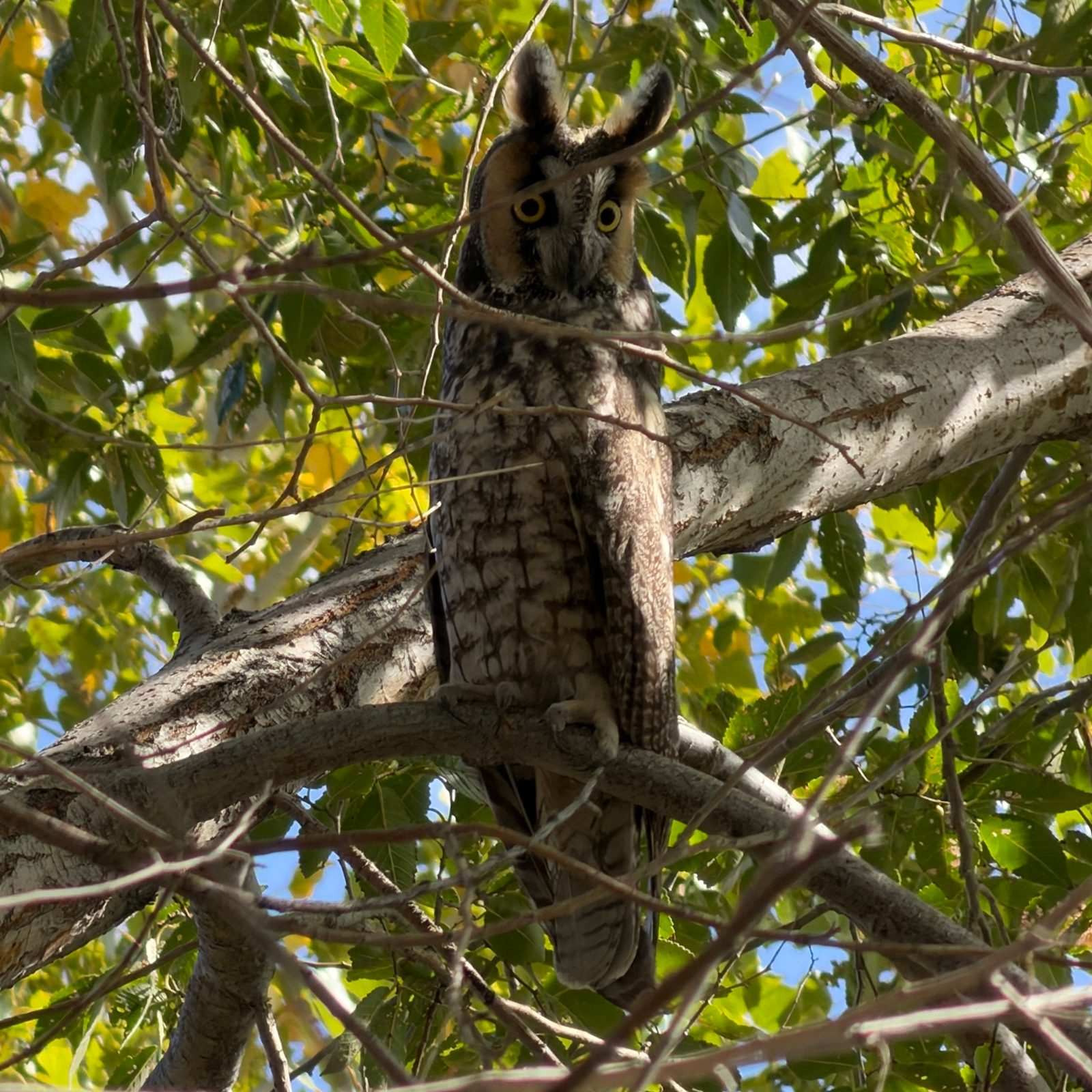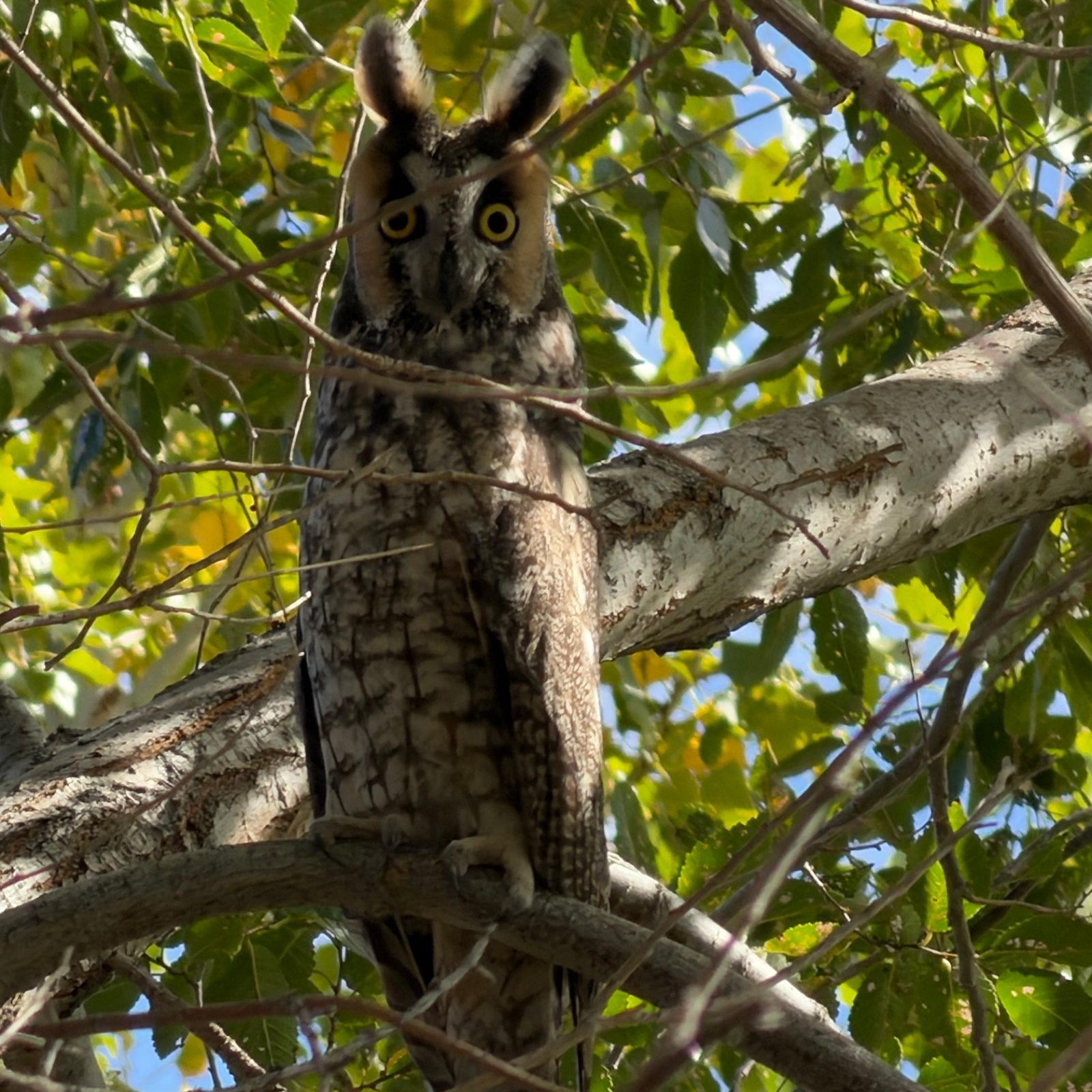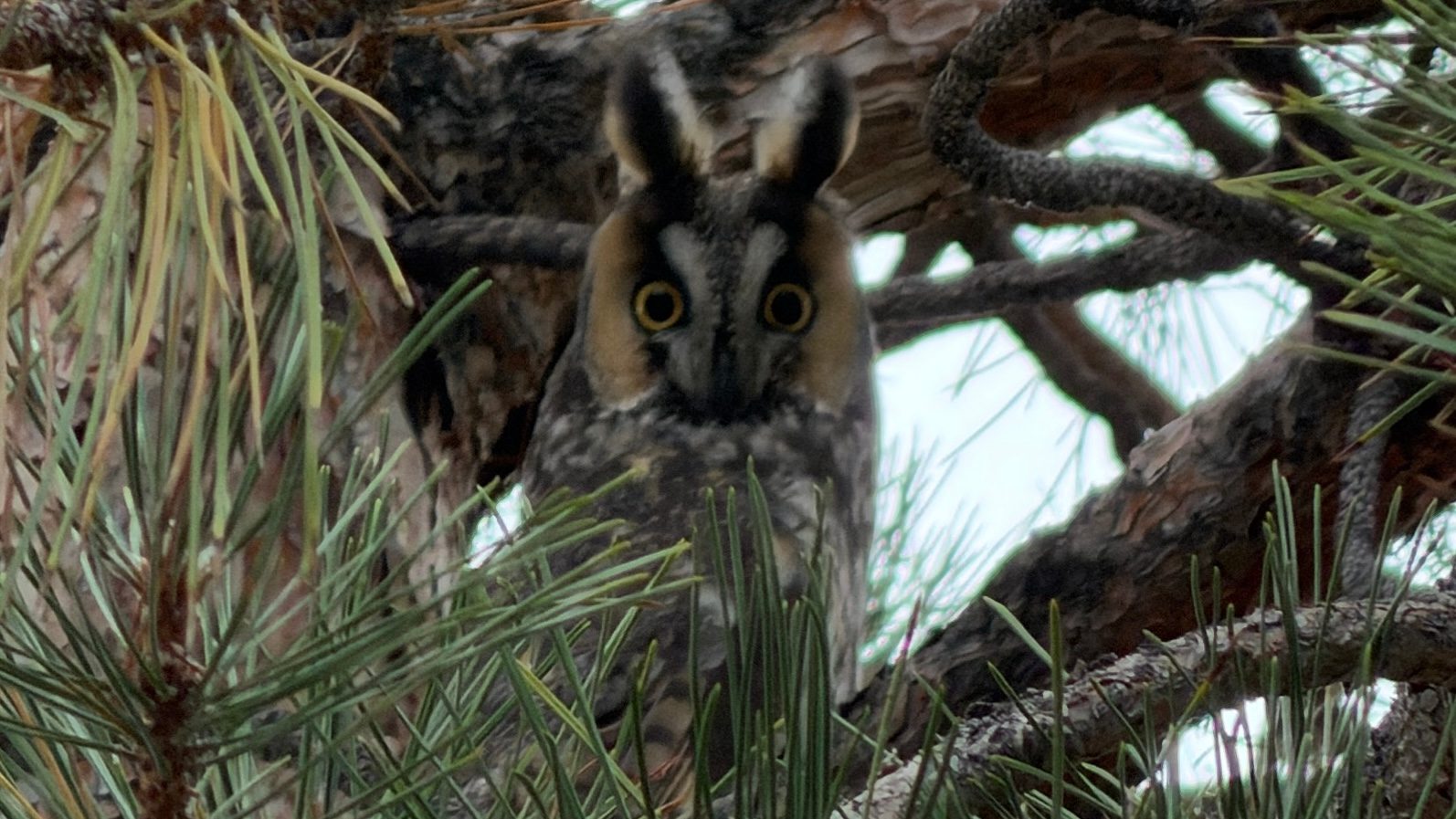


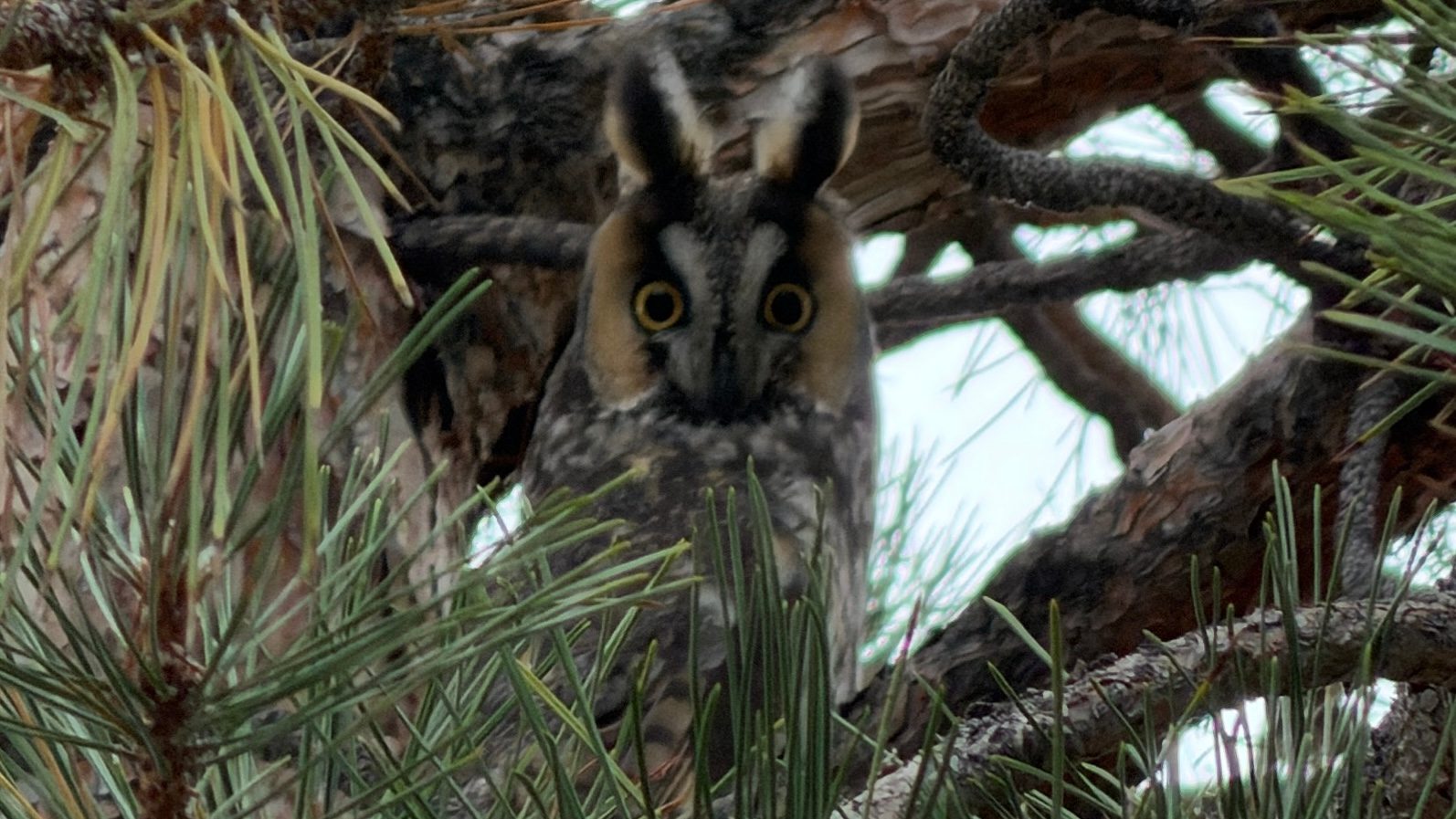
Just before noon I heard a racket outside, a lot of jays all yelling at once. When I went out to see what it was about, there was an owl sitting in the tree, tall and narrow, with two long ear tufts standing straight up.
I shooed the jays away. The owl let me do it and didn't leave. It just looked down at me with those yellow-orange eyes. I took a few photos and a couple of videos, then went back inside and left it alone.
Round two
In the afternoon, around twenty to four, there was another racket. Different tree, same owl, and more jays, a mix of them this time, giving it a hard time. I shooed those off too and filmed a few more short clips: the owl holding its ground, then alert and looking around once things quieted down. When I last checked, it was still out there, trying to get some sleep.
Trail notes
A racket of jays. Up in the tree, an owl: tall, narrow, two long ear tufts standing straight up.
Christian shooed the jays away. The owl let him, and didn't leave. A few photos and videos, then back inside.
Another racket. Different tree, same owl, and a mix of jays giving it a hard time.
Jays shooed off again. Short clips: the owl holding its ground, then alert and looking around once it went quiet.
Still out there, trying to get some sleep.
The ID
I had an AI tool help me with the ID: it's an adult Long-eared Owl (Asio otus). The giveaways are the tall ear tufts set close together near the middle of the crown, the rusty orange facial disc, and the white lines framing a dark crease between the eyes. The breast and flanks have crisp vertical streaks and fine barring, fully grown-in adult feathers with no downy juvenile fluff left.
The way it sat is classic for the species too. When a Long-eared Owl feels watched, it pulls its feathers in tight and stretches tall and thin against a limb, so it looks more like a broken branch than a bird. Long-eared Owls roost by day and hunt at night, so all that daytime shouting is the last thing it wanted.
When a Long-eared Owl feels watched, it pulls its feathers in tight and stretches tall and thin against a limb, so it looks more like a broken branch than a bird.
Let it sleep
What I learned: when songbirds gang up and scold like that, it's worth stepping outside to look. It's called mobbing, and it's often how you find an owl that would otherwise be invisible. Then the best thing to do is get a few photos and let it sleep.
The photo spread