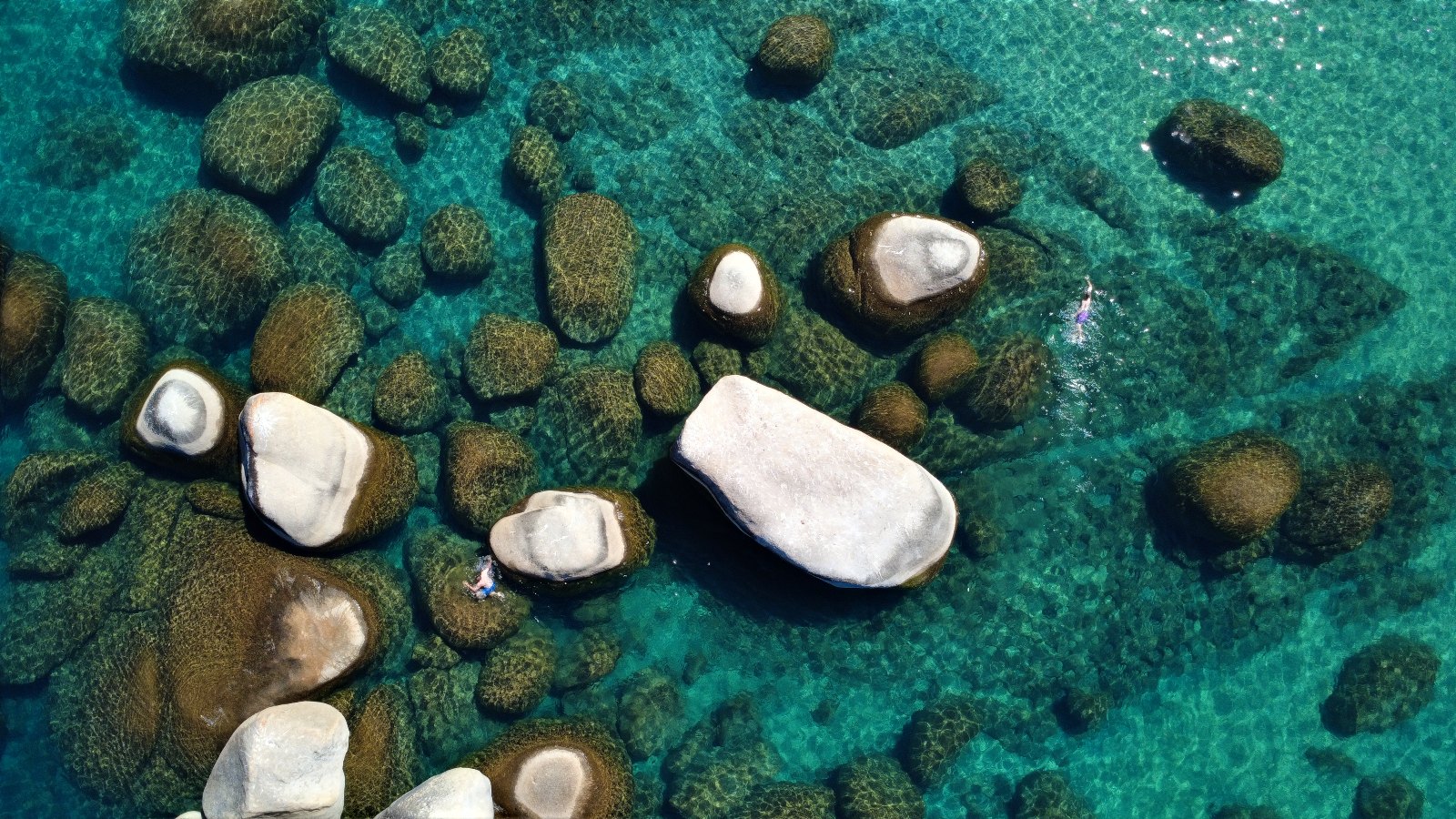

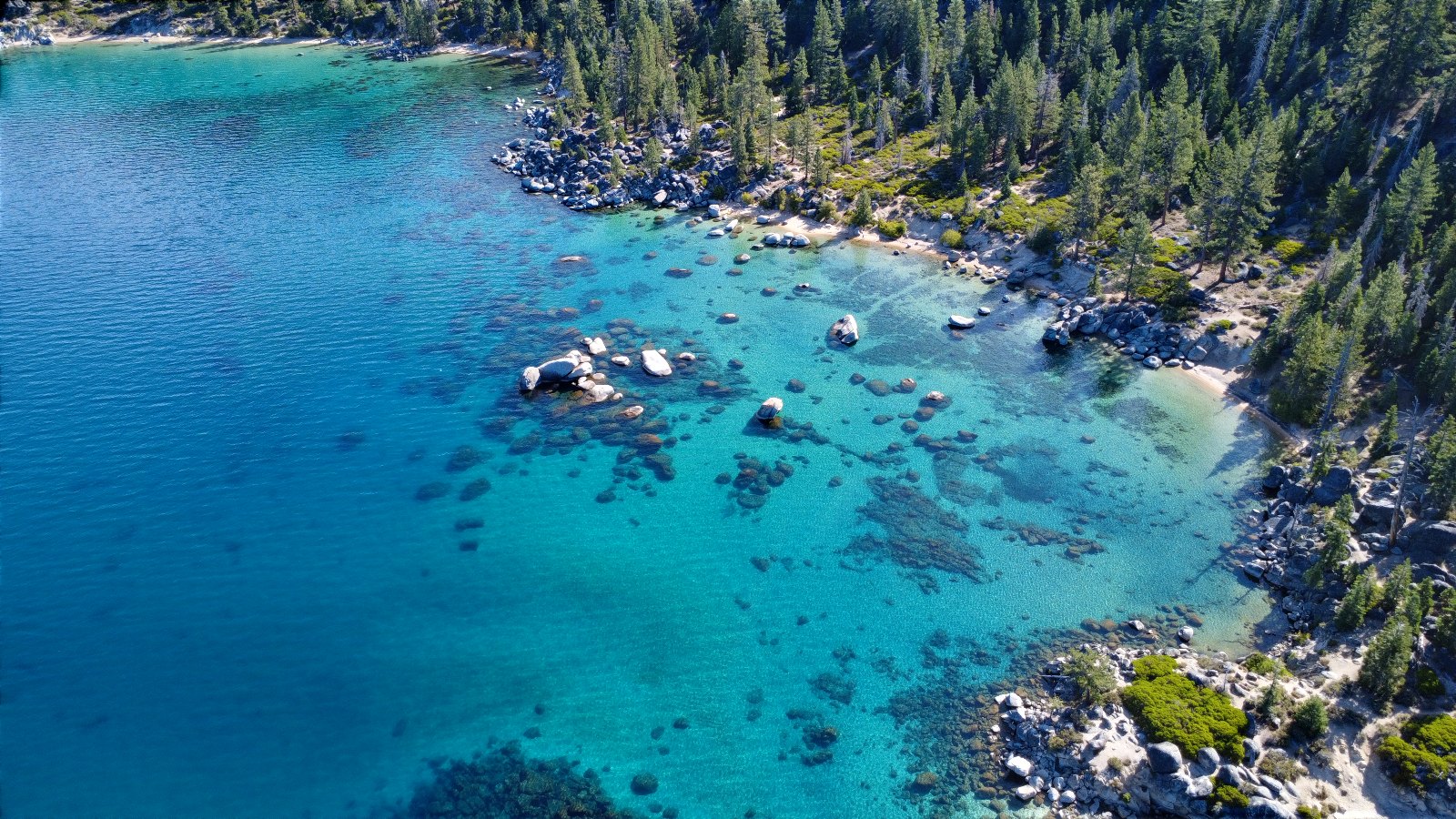
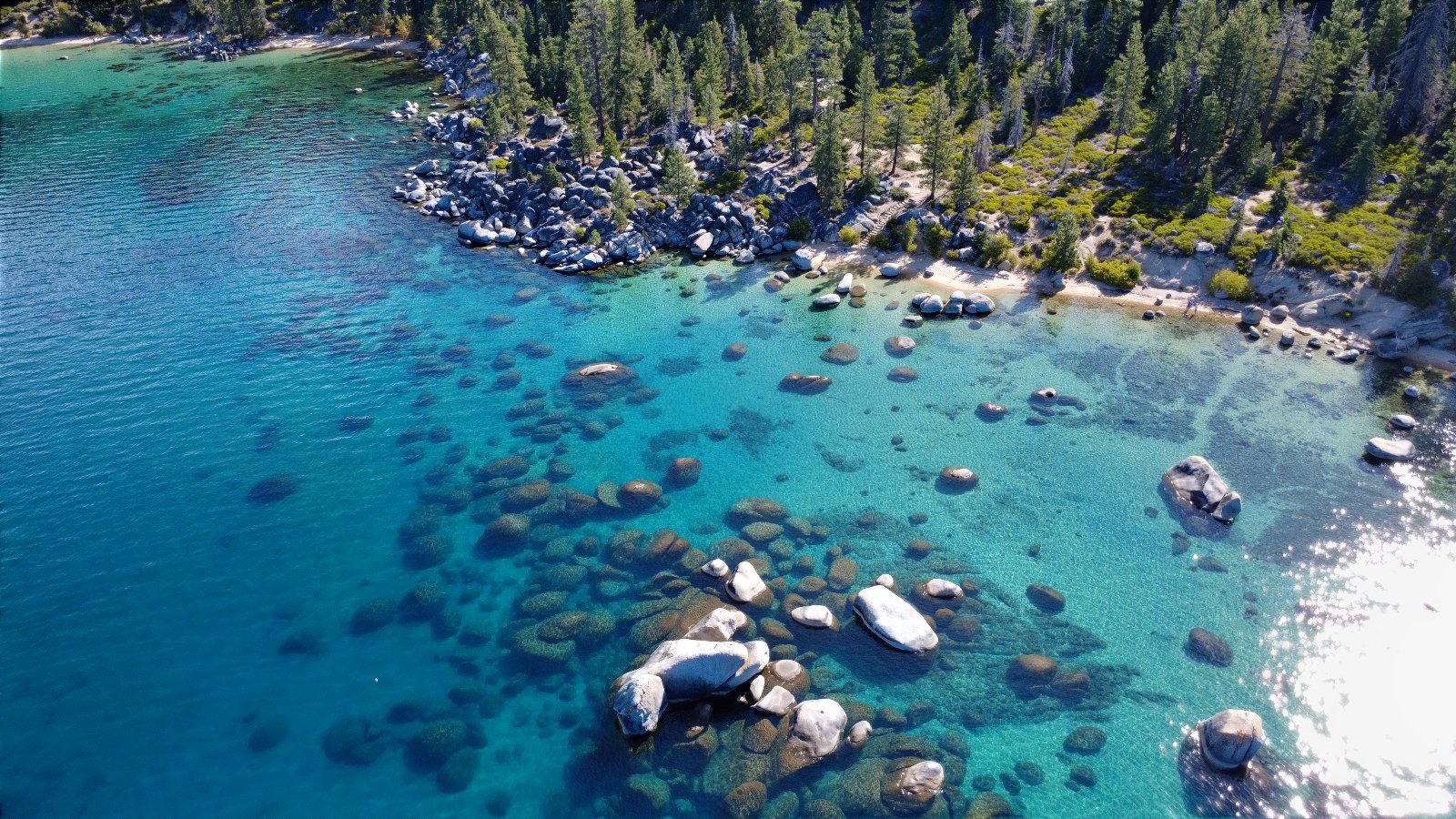
My drone can take three pictures of the same view a second or two apart: one a little dark, one normal, one a little bright. None of them is right on its own. The dark one keeps the white granite and the sun on the water; the bright one opens up the shadows under the pines. Putting them together used to mean a desktop app. Now the Studio does it as the photos come in, and this Note is the test.
None of them is right on its own.
How it works

Here's how it works. I drop the shots into a Drive folder and the Studio brings them into my browser. It reads the time each one was taken, and shots within three seconds of each other become a candidate bracket. Before it merges anything, it checks that they really are one view at different brightness. A burst at a single exposure, or three different views, stay separate photos.
Then it lines them up, because a drone drifts, by comparing simple black and white maps of each shot, coarse to fine. Then it blends them: every pixel takes most from whichever shot exposed it best, where it's sharp and colourful, mixed at several scales so there are no seams or halos. A gentle contrast curve, a touch more colour, and it's done in a few seconds, in the browser. Only the merged photo is kept, with its location data stripped. The three originals never leave the folder.
The real test
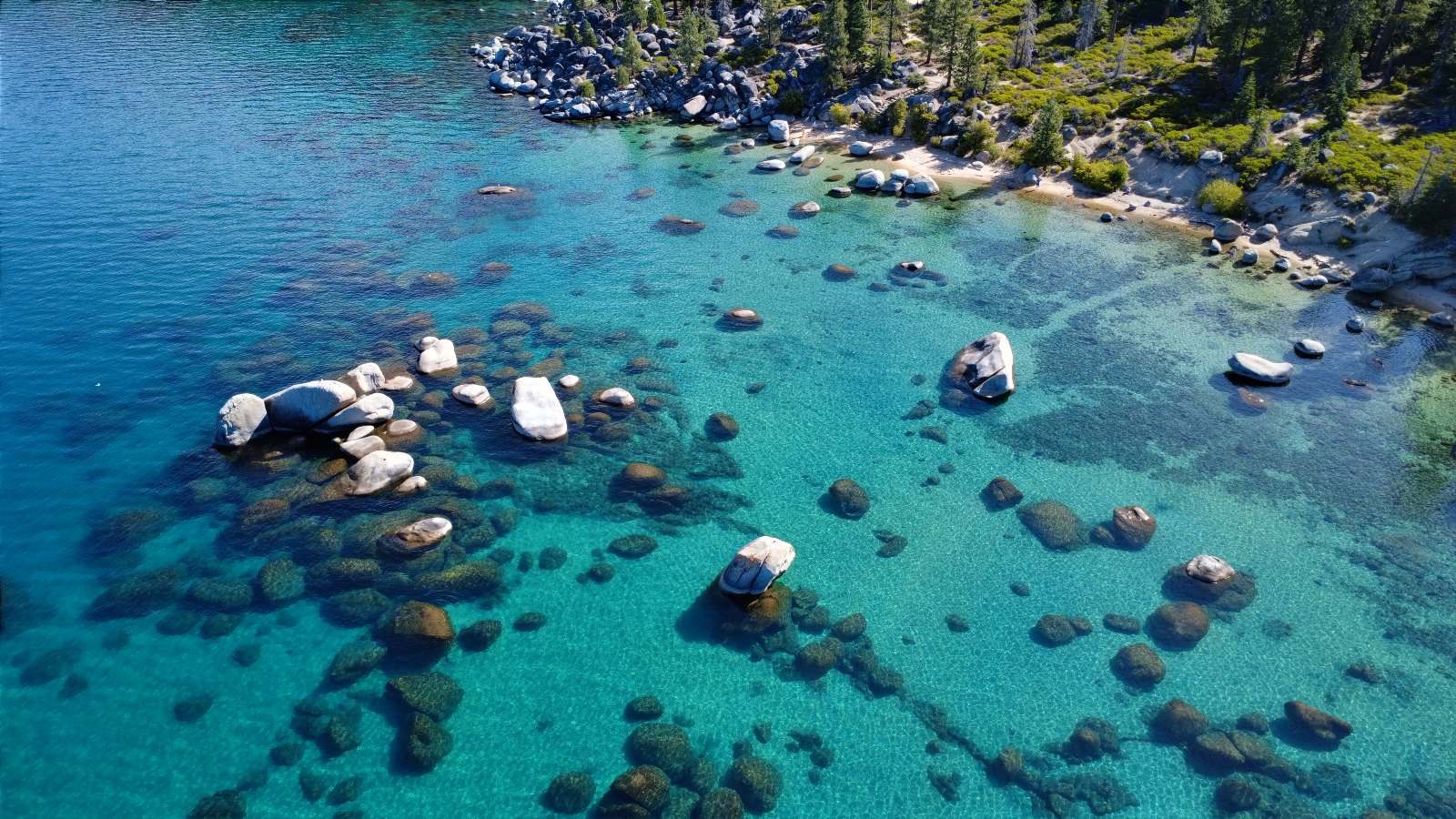

The real test was twelve shots from the morning of September 12: four brackets of three, at −0.7, 0 and +0.7. Four photos came out. The drone held so still that every bracket lined up to the pixel, so nothing had to be cropped. The clearest result is the third one, with the sun on the water. In the normal shot 4.2% of the picture is pure white, and 6.6% in the bright one. In the merge it's under 1%.
Before trusting it with real shots, I tested it on made-up ones: two of my Tahoe photos darkened, brightened and nudged a few pixels apart. It found the drift exactly, and it refused the burst and the three different views I slipped in.

What the real folder found
The real folder found two problems the made-up one couldn't. It was dated the same day as another Note, so the Studio only offered to open that one; now a folder that only matches by date can start a Note of its own. And the new strips, the three exposures side by side, were cropped like photos and looked like the originals, so now they show whole, under the photo they made.
What I learned: test with the real thing. The made-up bracket proved the maths. The real folder found the two places where the Studio got in my way.
Verdict
Tested with the real thing
Twelve shots went in and four photos came out, with the white granite, the sun on the water and the shadows under the pines all kept. The drone held so still that nothing had to be cropped, and the hardest frame went from 6.6% pure white to under 1%.
The made-up bracket proved the maths. The real folder found the two places where the Studio got in the way, and both were fixed the same day. Christian's own lesson is the one to keep: test with the real thing.