


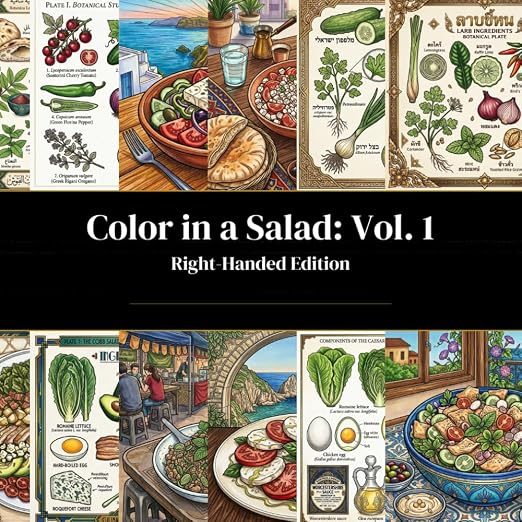
These are a few pages from Color in a Salad: Vol. 1, a coloring book I published on Amazon on May 13, 2026: salads drawn in clean black outlines, waiting for color.
The beet salad, twice
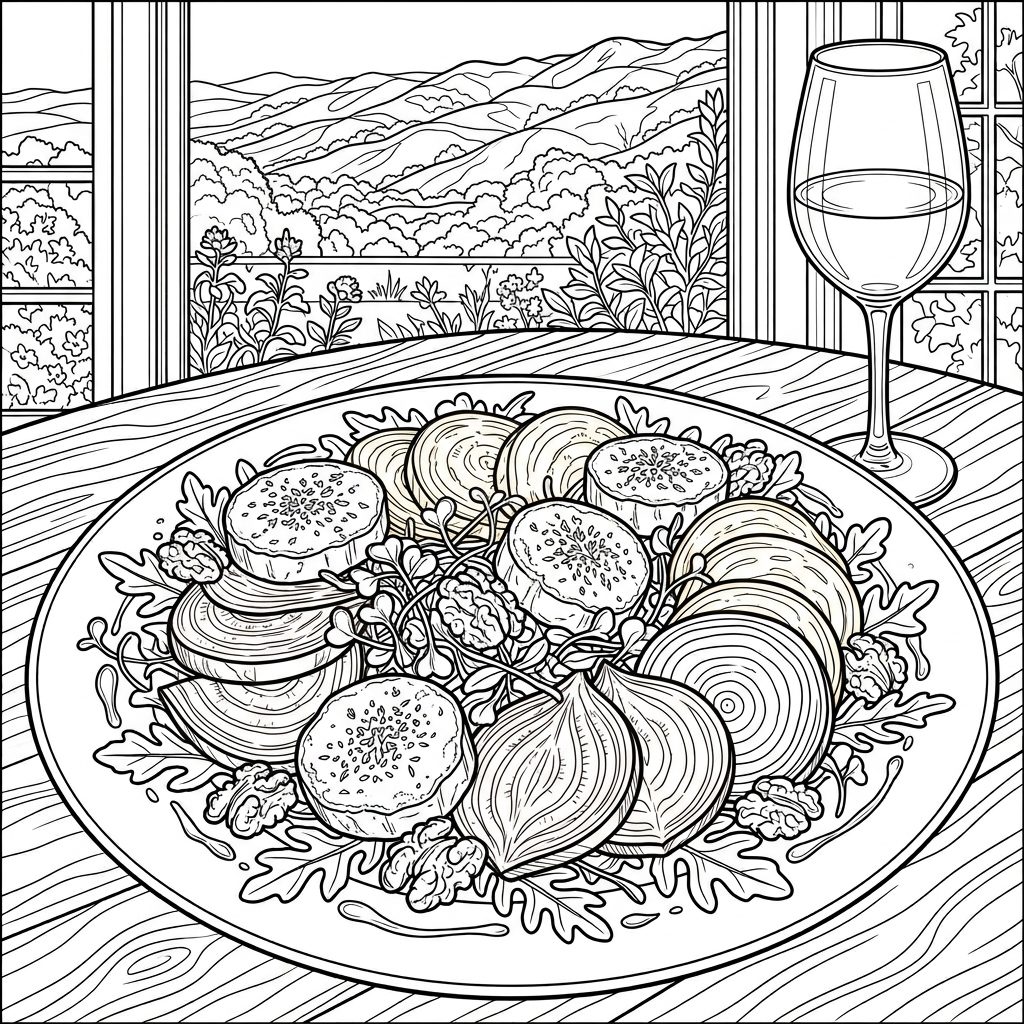
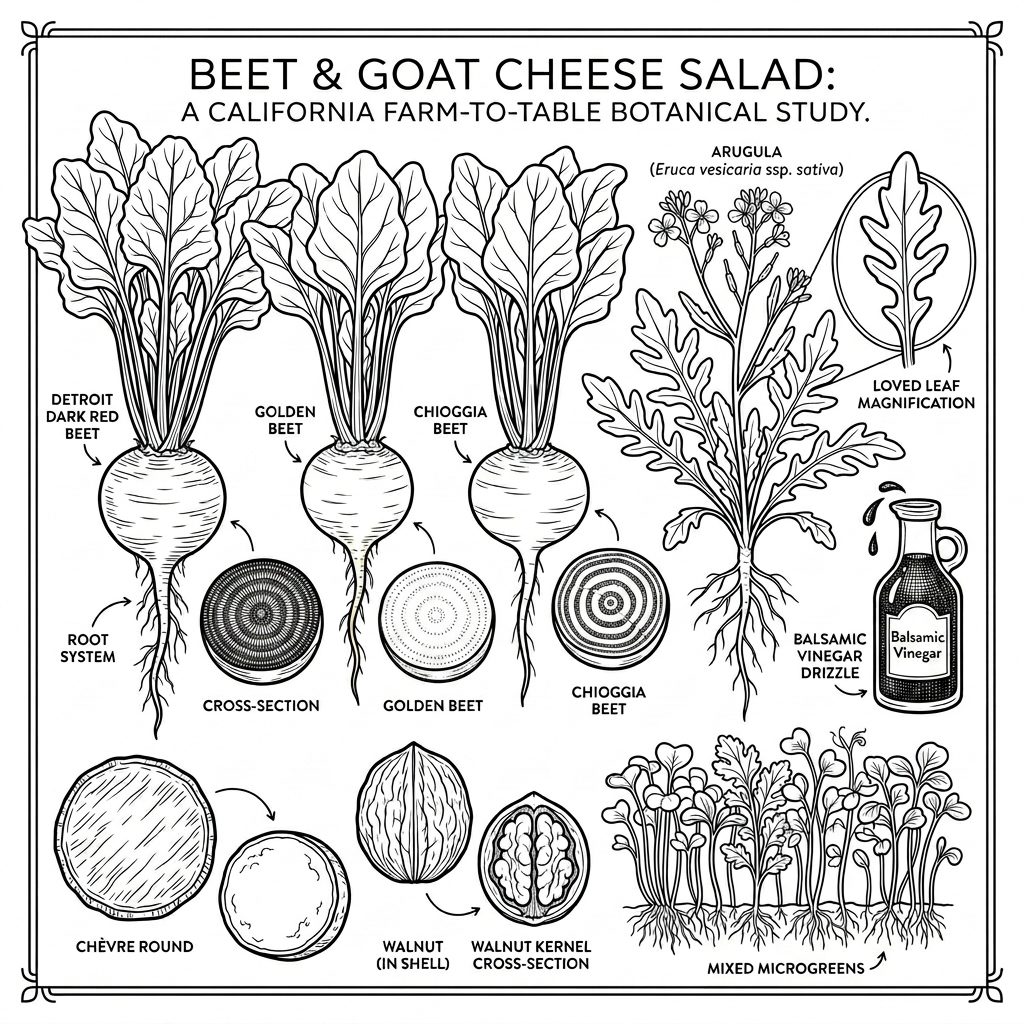
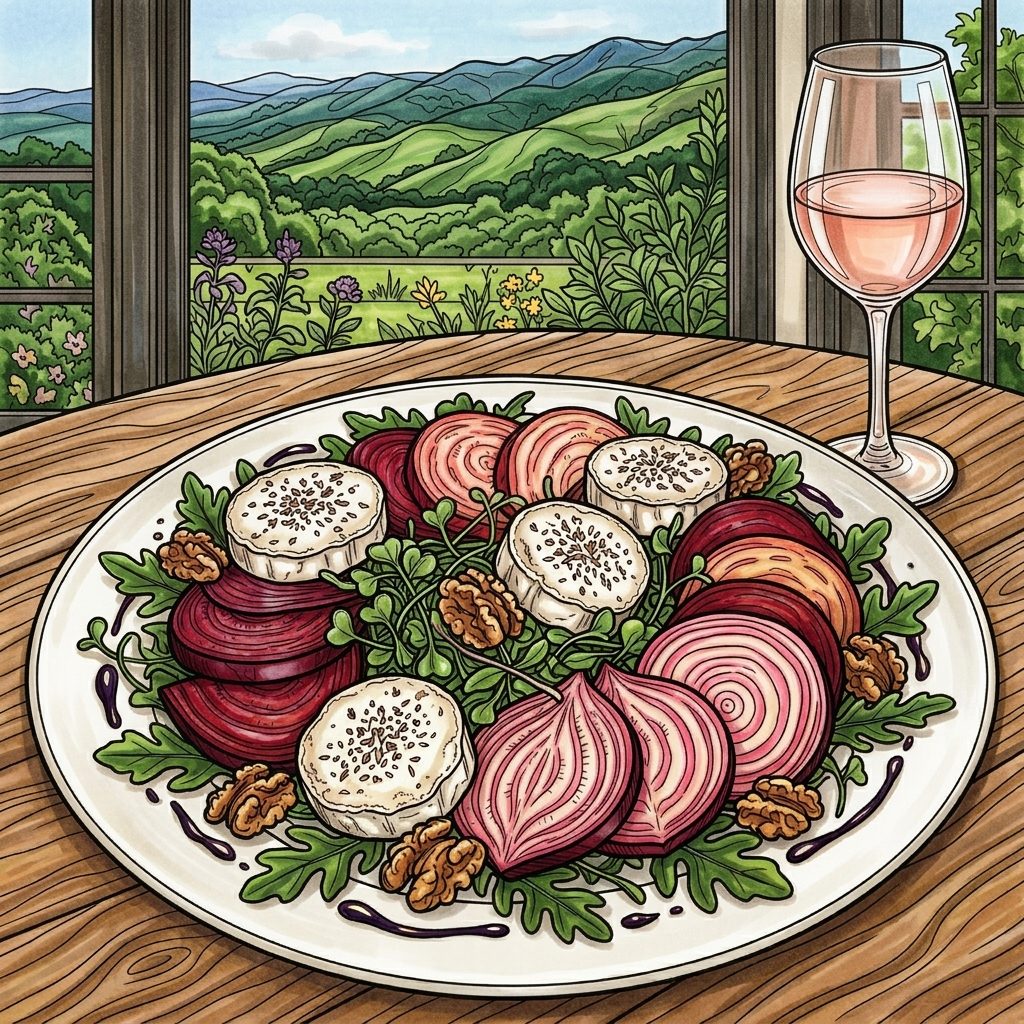
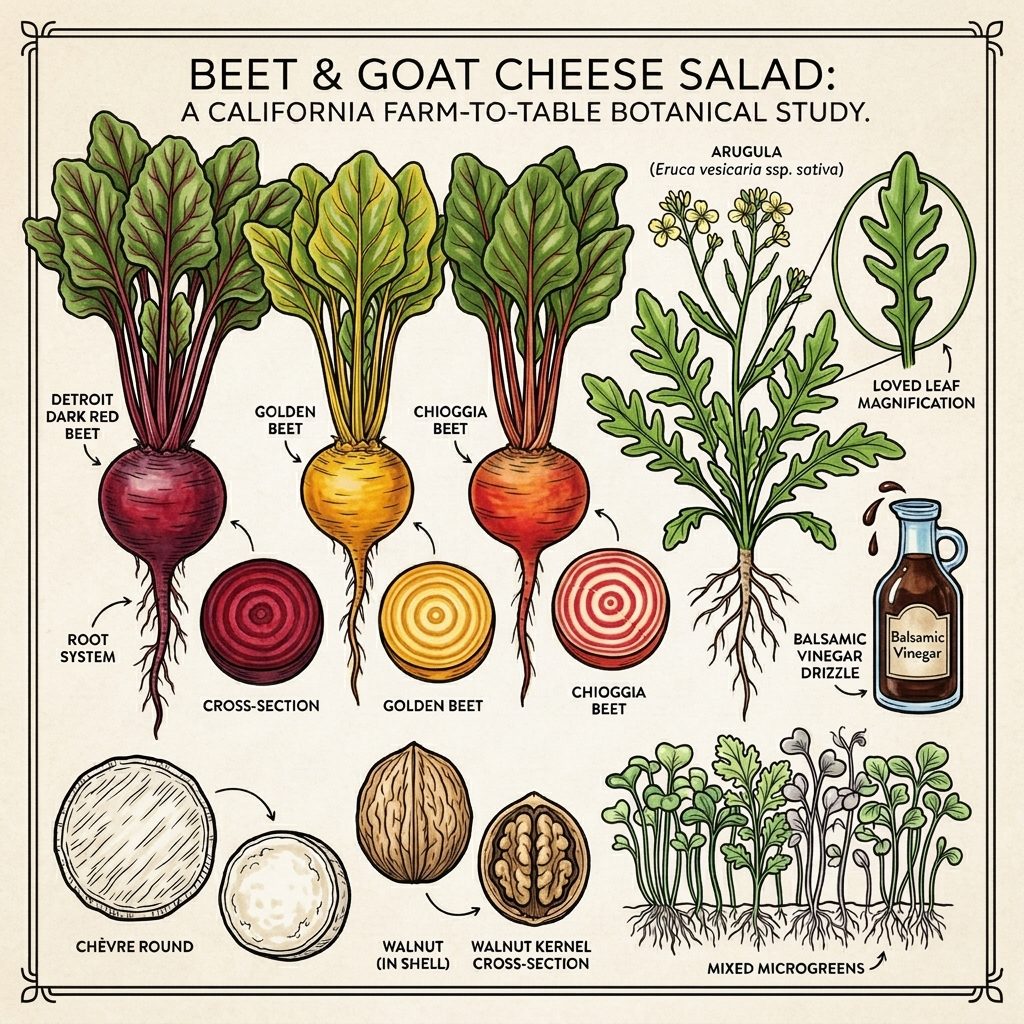
The set opens with a beet and goat cheese salad on a wooden table, with rolling hills outside the window and a glass of wine beside the plate. The next page takes that same salad apart as a botanical study. Three beets are shown with their leaves and roots, Detroit dark red, golden and Chioggia, each with a cross-section, plus arugula, a round of chèvre, a walnut cut open, a bottle of balsamic and a patch of microgreens.
A dish, then its parts
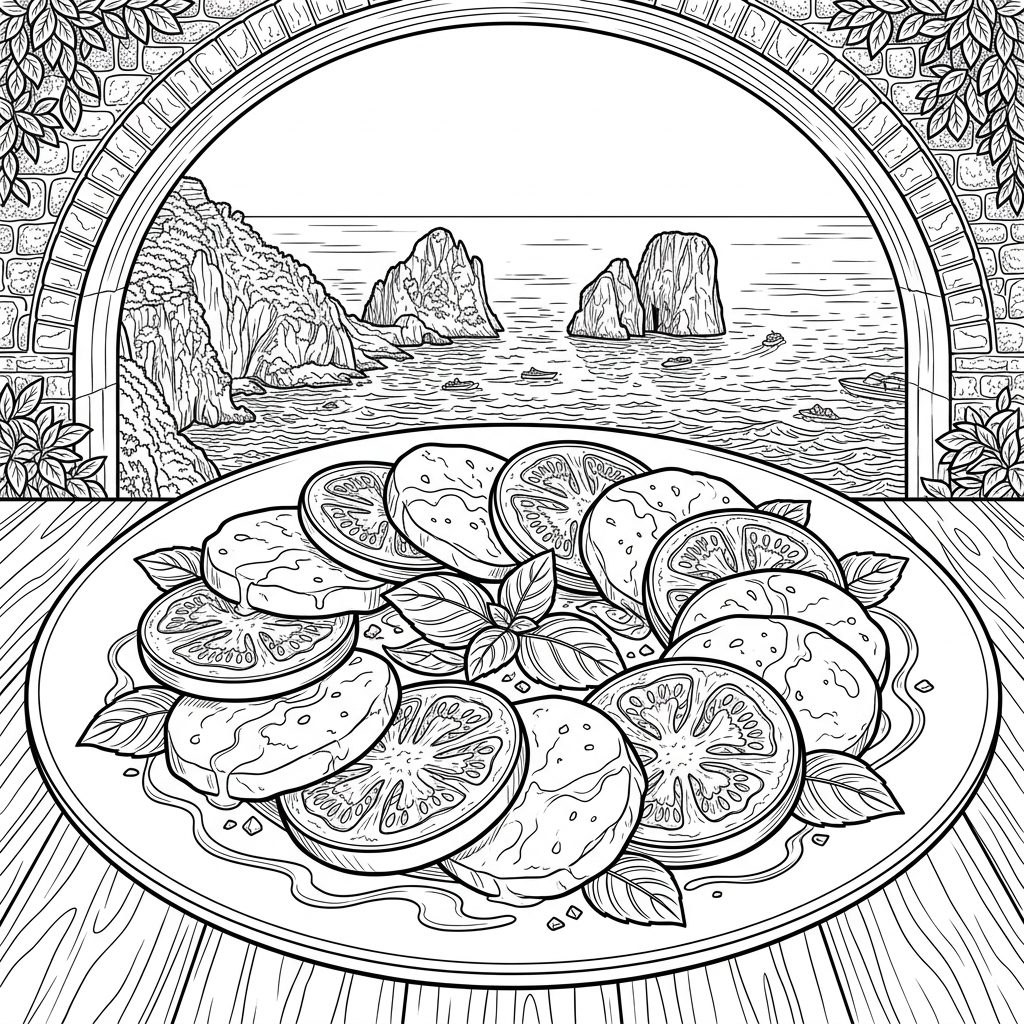
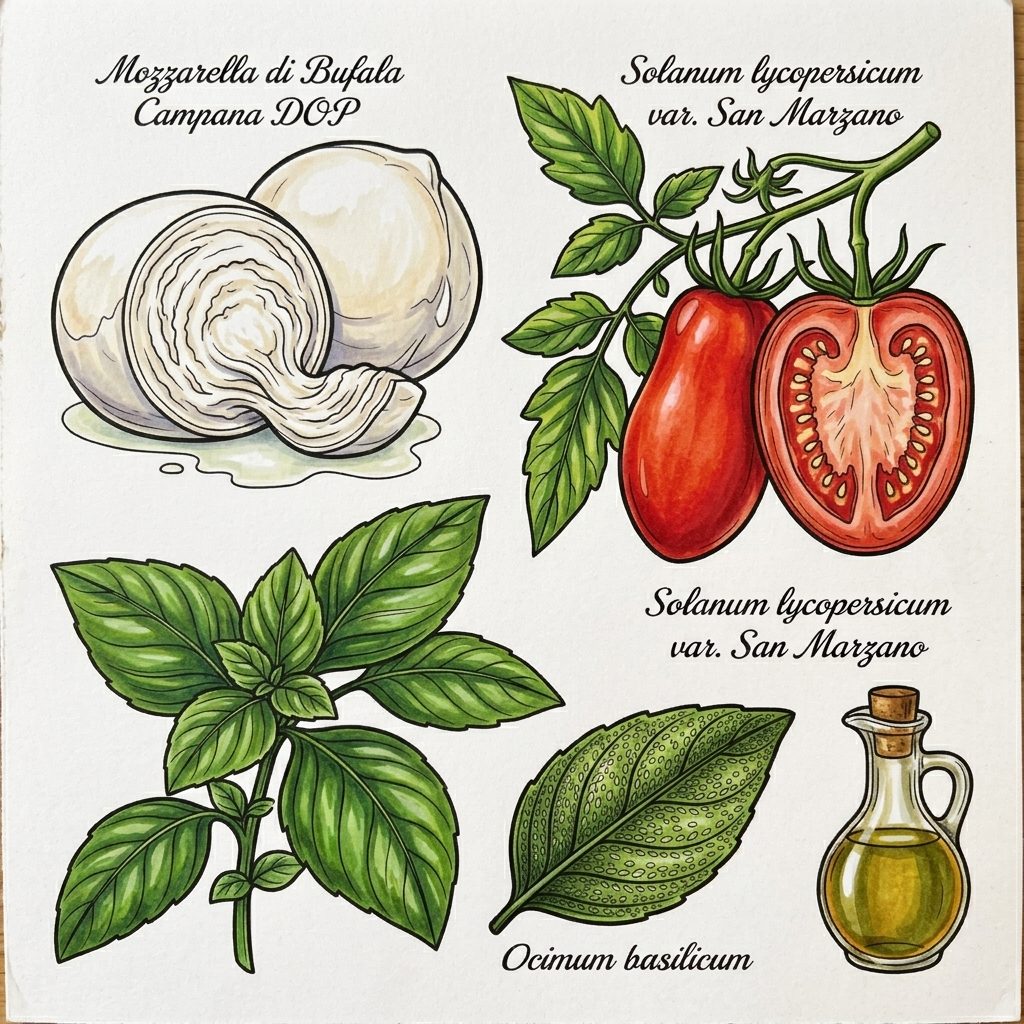
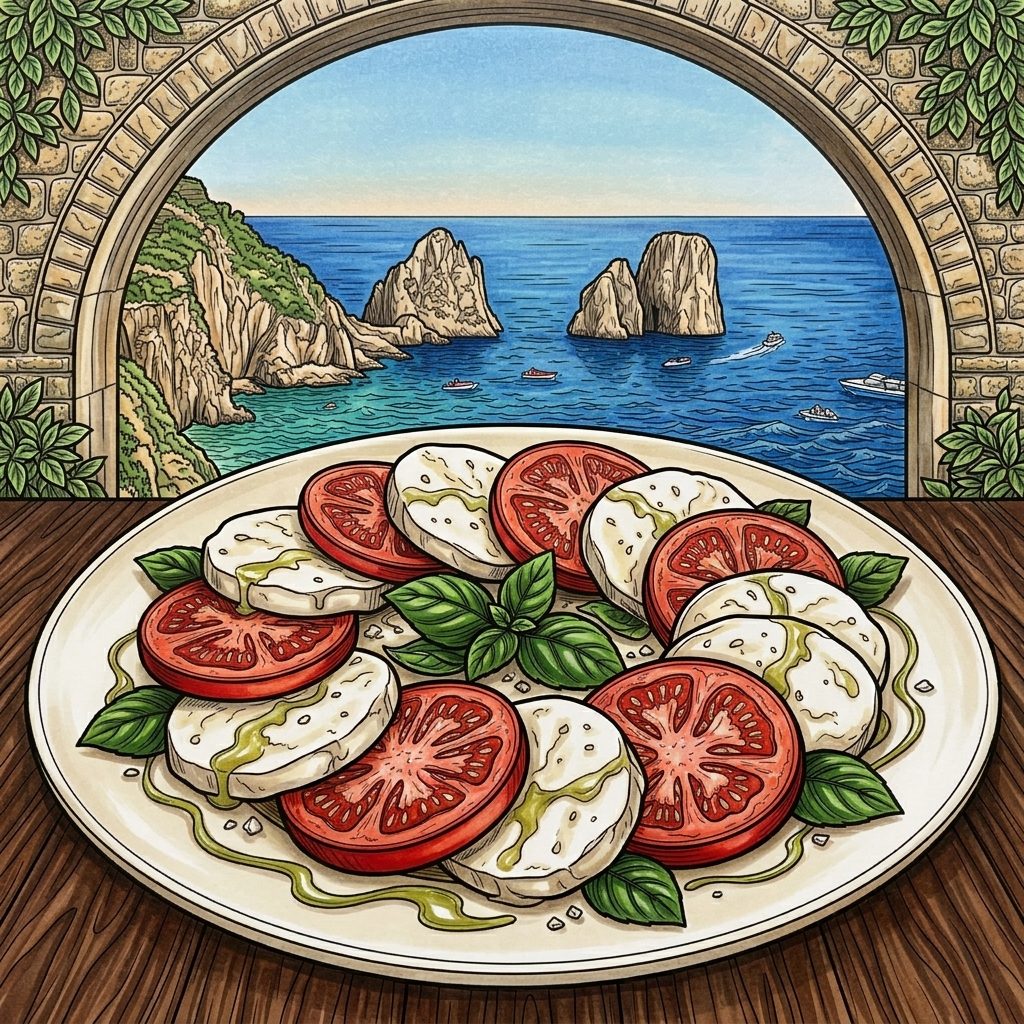
That pattern runs through the book: a finished dish, then the ingredients on their own. There's a caprese study with buffalo mozzarella, San Marzano tomatoes, basil and olive oil, and a caprese plate in a stone archway above the sea. There's a page of bread salad ingredients, ciabatta, heirloom tomato, cucumber, red onion, olives and capers, and a bowl getting its dressing poured in front of a window that looks out over a vineyard. A tiled table holds a big patterned bowl of salad with small dishes of olives and dips. A night-market table holds a minced salad with herbs and lime, sticky rice in a woven basket, and stalls behind it.
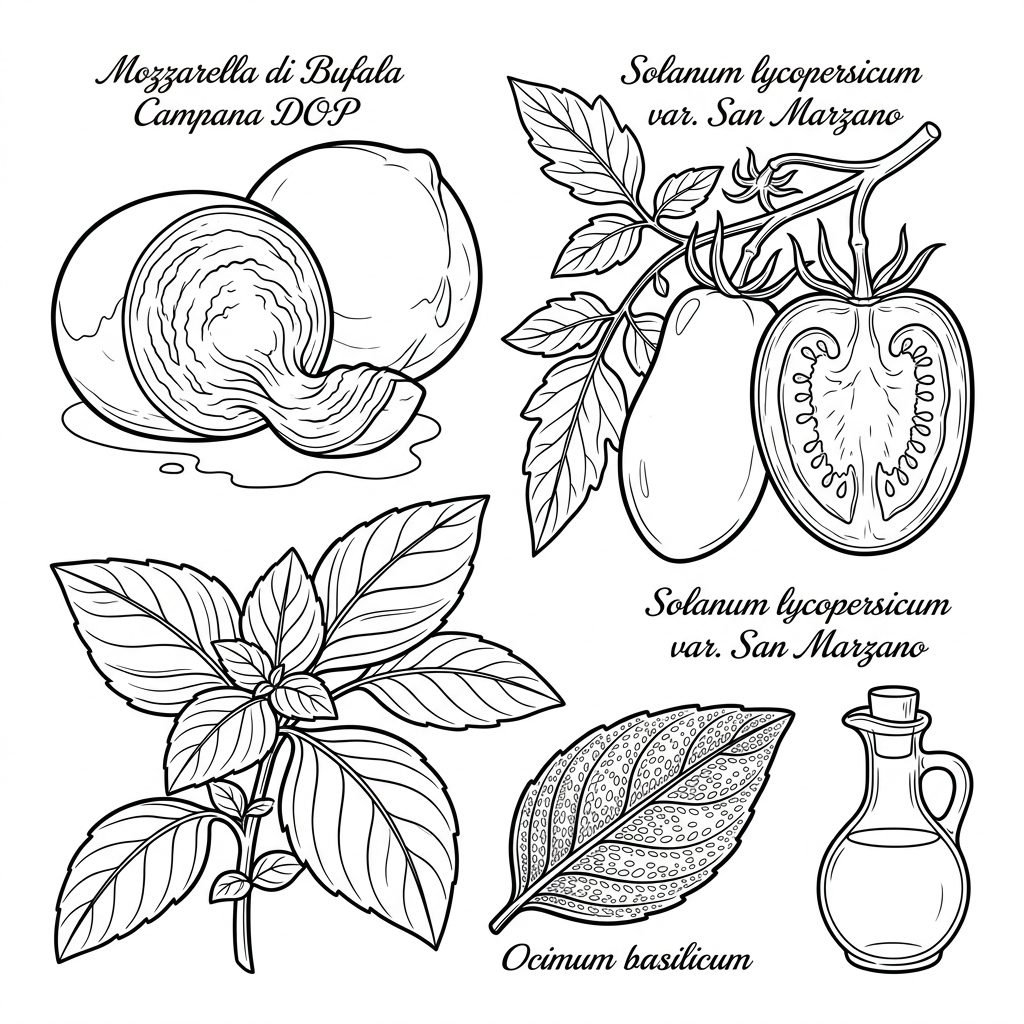
That pattern runs through the book: a finished dish, then the ingredients on their own.
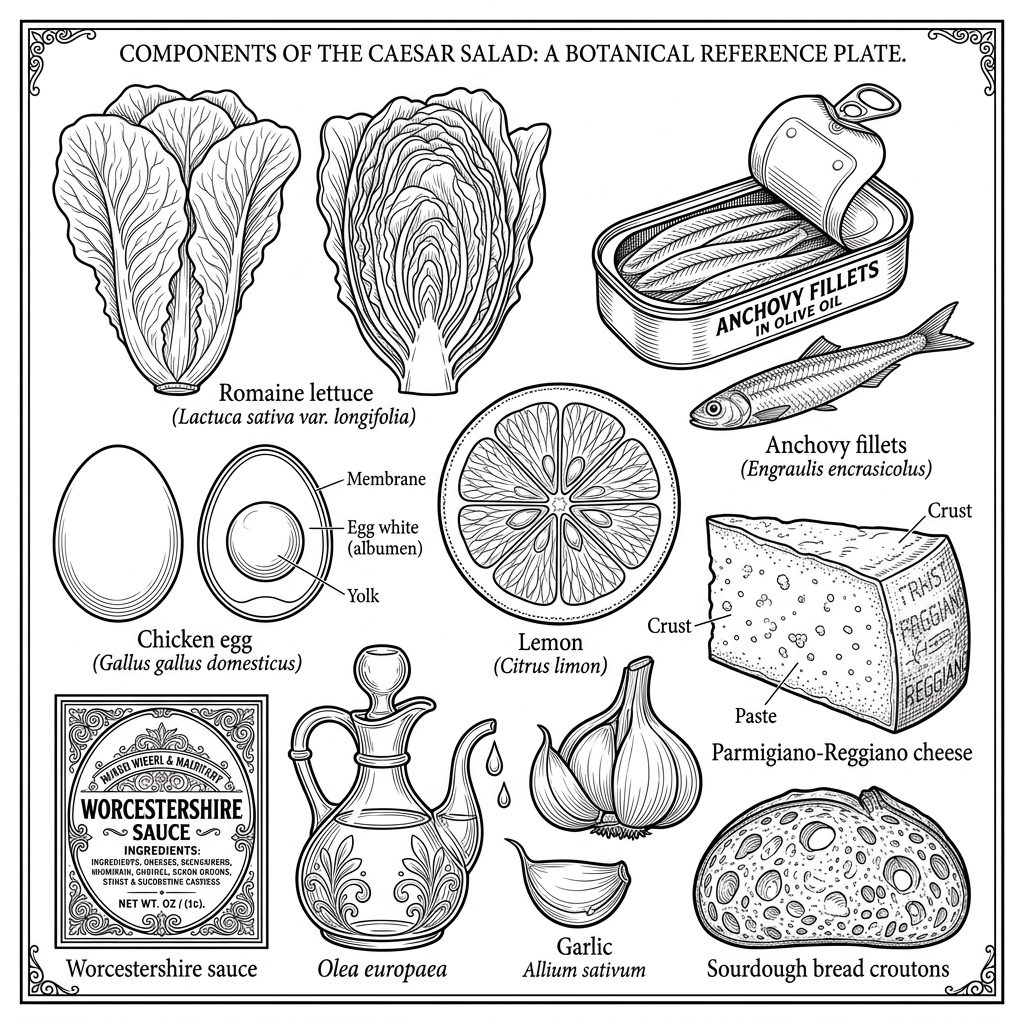
The reference plates
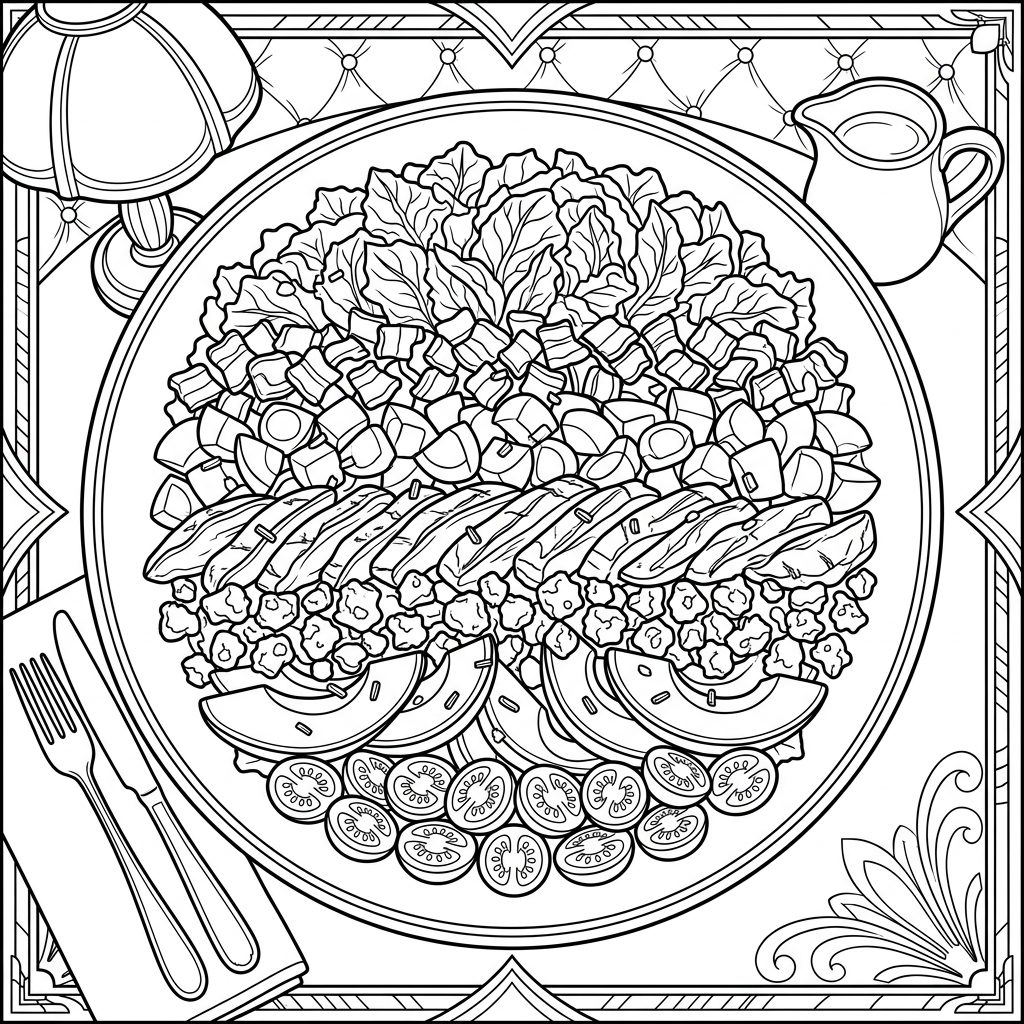
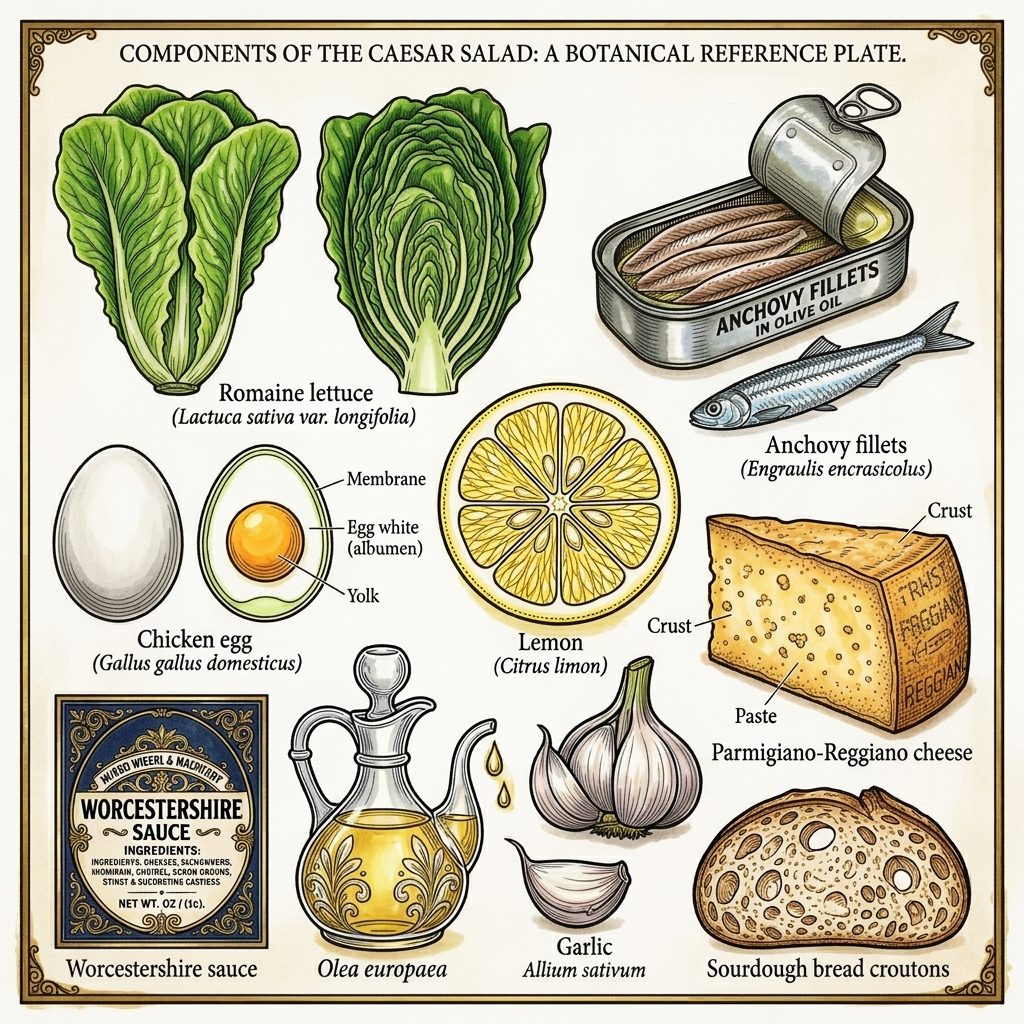
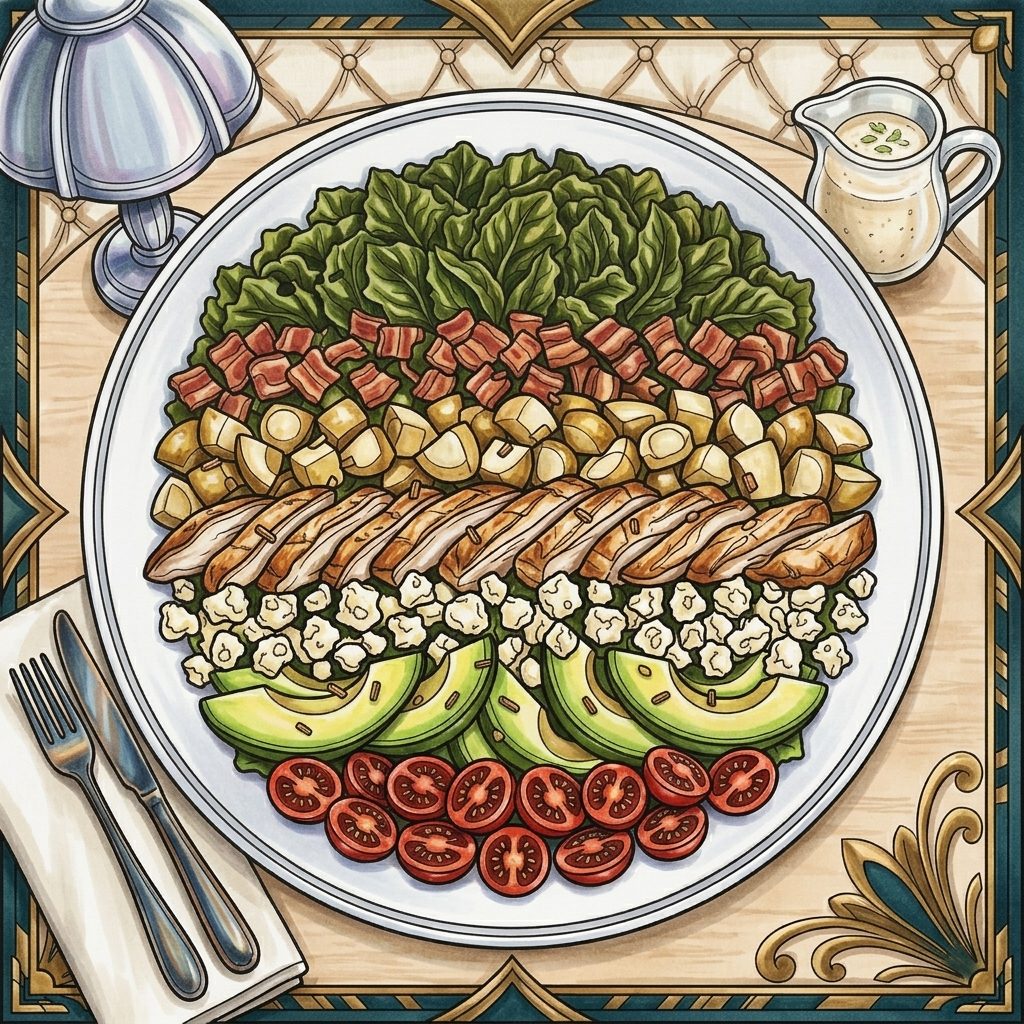
The reference plates are the ones I'd look at longest. The Caesar plate lays out romaine, a cut egg with its yolk and white labeled, anchovies in a tin, lemon, garlic, Parmigiano and croutons. The poke page puts ahi, avocado, edamame, cucumber, pickled ginger, sesame and green onion in a ring, with tropical leaves around the edge. The Cobb gets two pages: the ingredients as a chart, then the salad itself, built in neat rows on a plate, greens, bacon, egg, chicken, blue cheese, avocado and cherry tomatoes.
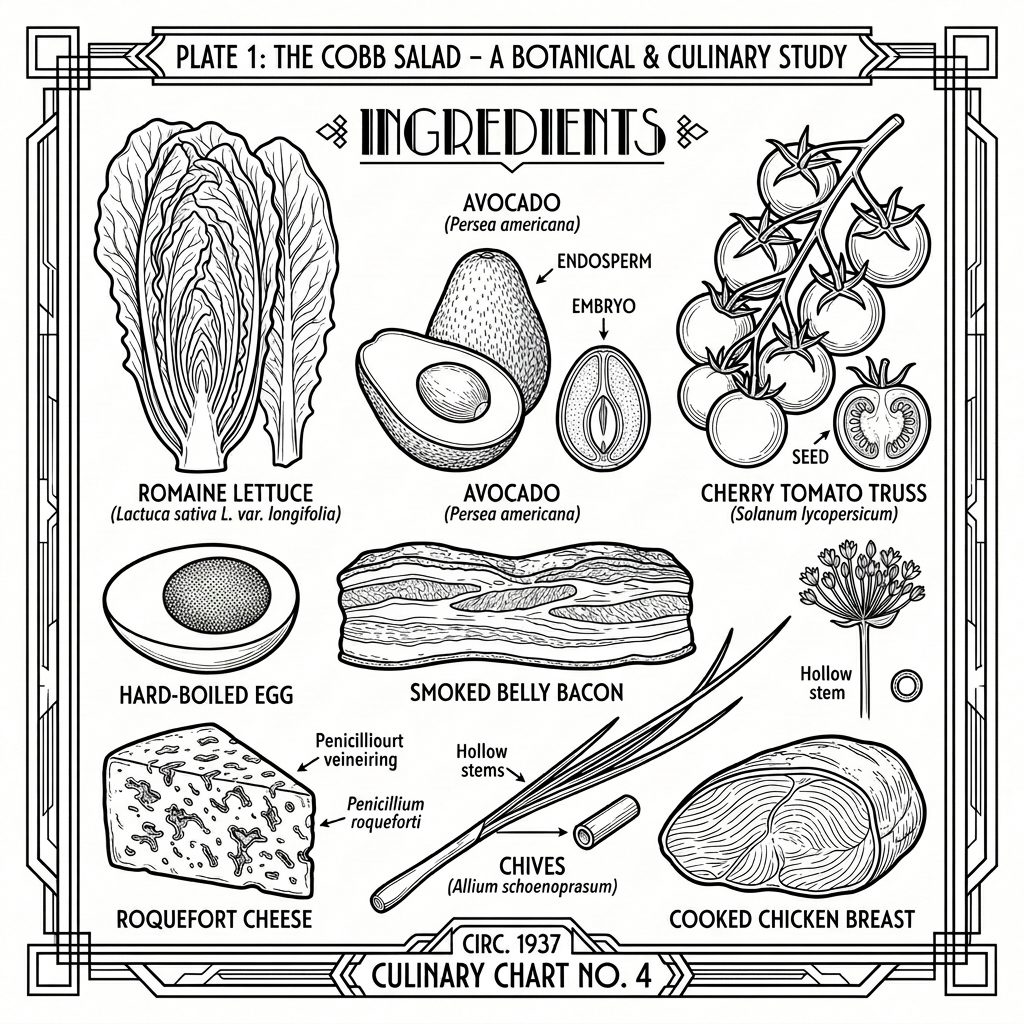
The bread salad, the tiled table, the night market and the poke aren't pictured here. For those, you'll have to open the book.
How I made them
I made the pages with my ProPre engine, the prompt tool I wrote about in [a winter night in the workshop](https://www.christiangehrke.com/?workshop+winter+night+propre-engine). Every label, tin and bottle in the book is invented. That's built into the prompt tool, so a page can show a tin of anchovies or a bottle of Worcestershire without anyone's real brand on it.
A few pages are shown here colored in, next to their line art. Those colored versions are AI previews, not ProPre: one idea of how a page could turn out. How yours looks is up to you and your pencils.
There's also a short clip of my AI team making a Caesar salad in the kitchen: GlazyArray, Starlee and A.L.T.A., the characters I created for this show. None of them are real, but they did a fine job with the romaine.
[Color in a Salad: Vol. 1 is on Amazon now](https://www.amazon.com/dp/B0H2SDMLDH).
What I learned: pairing every salad with its ingredients, the ingredients on one page and the salad on the other, gives the book a second life. When you're done coloring it in, you can use it as a cookbook.
Selected works
A beet and goat cheese salad on a wooden table, hills outside the window, a glass of wine beside the plate
The same salad taken apart as a botanical study: three beets with their leaves and roots, each with a cross-section
An ingredient study of buffalo mozzarella, San Marzano tomatoes, basil and olive oil, and a plate in a stone archway above the sea
Ciabatta, heirloom tomato, cucumber, red onion, olives and capers, and a bowl getting its dressing in front of a vineyard window
A minced salad with herbs and lime, sticky rice in a woven basket, stalls behind it
The Caesar with its egg yolk and white labeled, the poke in a ring of tropical leaves, and the Cobb across two pages